
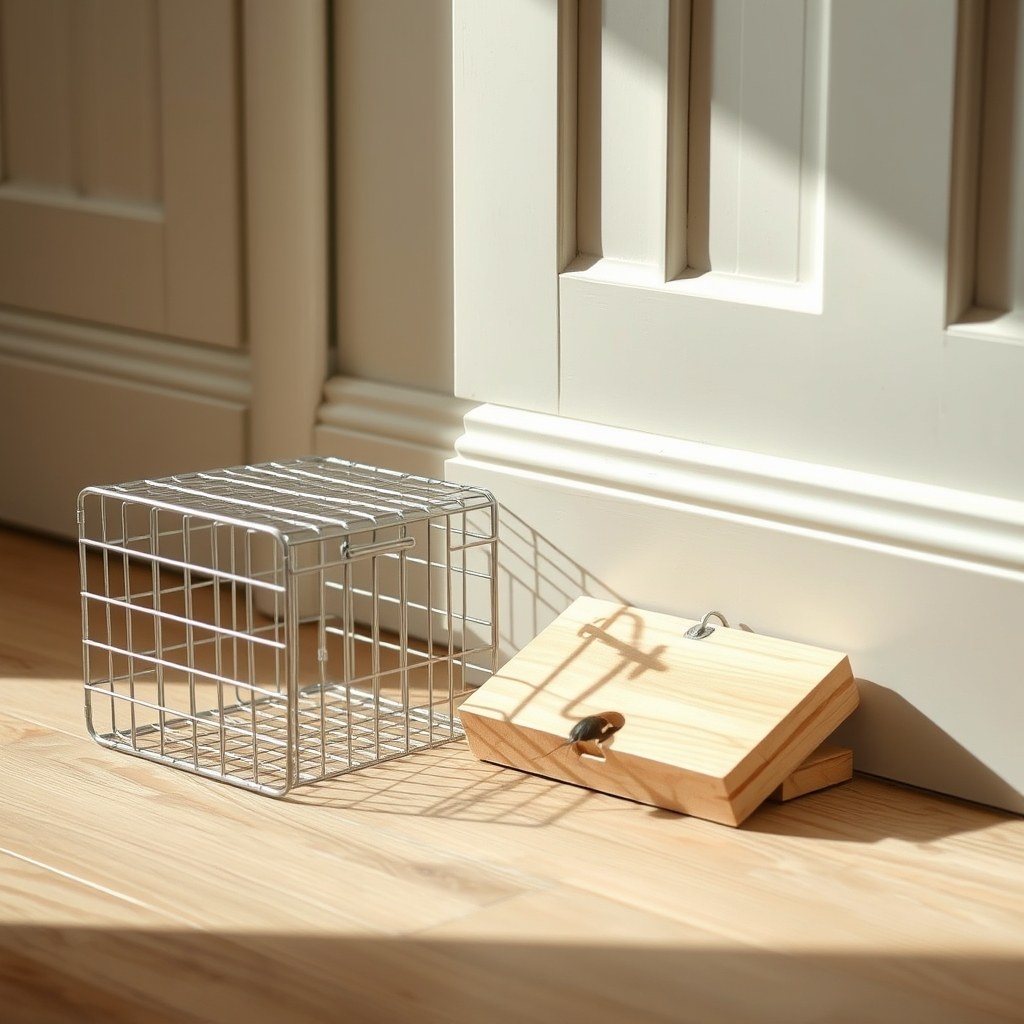
The best mouse trap depends on the room. Use a snap or electronic trap along the kitchen wall, and an electronic trap with an alert in the loft. In a home with children or pets, choose a closed electronic box, never loose poison.
A mouse can live behind your fridge for weeks and eat better than you do. You do not need poison to end the arrangement. You need the right trap for the right room, and a plan for what happens after it fires.
This guide compares the three main families of mouse traps: snap, humane live-catch and electronic. It sorts them by situation: the kitchen, the loft, and a home with children or pets. Prices are in euros and come from the retailer pages linked in our product sheets.
The short answer
- Kitchen, small problem: a snap trap or an electronic trap, set along the wall where you see droppings.
- Loft or cellar you rarely visit: an electronic trap with a signal, so you know when to go up.
- Home with kids or pets: an electronic trap with a closed chamber, or a trap inside a lockable box. Never loose poison.
- You want the mouse alive: a humane live-catch trap, checked often.
For the full list of products we rate, see our pest control product ranking.
Snap, humane, electronic: how each one works
Snap traps use a spring bar that closes when the mouse touches the trigger. They are cheap and need no power. You reset them by hand, which means touching the catch or the bar, and an exposed bar can hurt a curious finger or paw.
Humane live-catch traps are small boxes with a door that shuts behind the mouse. Nothing is killed. The catch: you have to check them often, because a trapped mouse cannot get food or water, and you then have to release it somewhere.
Electronic traps are battery boxes. The mouse walks in for the bait, closes a circuit and gets a high-voltage shock. The chamber is closed, so you do not see or touch the catch. They cost more, and you need batteries.
There is a fourth family we do not recommend: glue traps. In England they are now illegal for rodents. The law here is the Glue Traps (Offences) Act 2022. It says “a person who sets a glue trap in England for the purpose of catching a rodent commits an offence” (legislation.gov.uk). That ban came into force on 31 July 2024 (SI 2024/686). The offence is about traps set in England. Anywhere else, check your local rules before you buy one.
Comparison table by situation
| Snap trap | Humane live-catch | Electronic trap | |
|---|---|---|---|
| Kitchen | Good: cheap, fast, fits behind appliances | Possible, if you check it often | Good: closed, clean disposal |
| Loft / cellar | Weak: you may not notice a catch | Poor: a mouse can stay trapped for a long time | Best, especially with a signal or app |
| Kids / pets in the home | Risky unless placed in a closed box out of reach | Safe for hands, but needs frequent checks | Best option: closed chamber |
| Reset effort | High: you touch the bar and the catch | Medium: you release the mouse each time | Low: tip out the catch, switch back on |
| Power | None | None | Batteries |
| Kills the mouse | Yes | No | Yes |
The electronic traps we list, with prices
These are the traps from our product sheets. The prices are the ones listed on the retailer page when we checked it in October 2026. Prices move, so check the live listing.
| Product | Price | Our rating | Target | What the retailer page says |
|---|---|---|---|---|
| Protect Home Electronic Mouse Trap (Victor) | €29.99 | 8/10 | Mice | Poison-free, 4 x AA batteries, green light flashes when armed, indoor use (cellar, laundry room, attic) |
| Swissinno SuperCat Electronic Mouse and Rat Trap with Bluetooth | €92.99 | 8/10 | Mice and rats | Bluetooth alert to an app, C batteries not included, disposal without touching the catch |
| Protect Home Electronic Rat Trap (Victor) | €37.50 | 7.5/10 | Rats | Poison-free, batteries not included, green light stays on up to 7 days after a catch |
Protect Home Electronic Mouse Trap (Victor): the everyday pick
At €29.99, this is the sensible starting point for a kitchen or a utility room. You add bait, close the lid and switch it on; a green light flashes and the trap buzzes to show it is armed. The listing says it handles up to 100 mice and needs four AA batteries. It is sold for indoor use: cellars, laundry rooms and lofts. Retailer page.
Swissinno SuperCat with Bluetooth: for the loft you never visit
At €92.99 it is the expensive one. What you pay for is the app alert. The trap tells your phone when it fires, so you only climb into the loft when there is something to collect. It works on mice and rats, and the retailer says you can dispose of the catch without touching it. Batteries (C size) are not included. Retailer page.
Protect Home Electronic Rat Trap (Victor): if it turns out to be a rat
If the pest turns out to be a rat, not a mouse, you need a trap built for it. This model (€37.50) is built for rats. It has a bait tray, an ON lever and a green light that stays lit for up to 7 days after a catch. The retailer text says one set of batteries, sold separately, kills up to 50 rats. The packaging shown on the same page says up to 35. Retailer page. For the full comparison, see our guide to the best rat traps for house, garden and shed.
Not sure you even have rats? The Neudorff Sugan Rat Bait Station with Monitoring Bait (€22.99, 7/10) is a reusable box that combines a snap trap with a scented lure. The retailer says the lure lets you monitor an infestation for up to 3 months and that you can remove a catch without direct contact. The only “active ingredient” listed is a scented plastic lure, not a poison. Use it as the instructions say, and keep it out of reach of children and pets. Retailer page.
The Sugan station is a rat-sized snap trap inside a box. Apart from it, our product sheets list no snap trap and no humane live-catch trap yet. So we give no price or rating here for a mouse snap trap or a live-catch trap.
Room by room: where each trap earns its keep
The kitchen: fast and tidy
Mice in a kitchen follow the walls and hide behind the fridge, the oven and the dishwasher. Set traps flat against the wall, along the route where you find droppings. Seal the gap first, then set the trap, or a new mouse will simply take the empty flat.
A snap trap does the job if you are fine with resetting it by hand. An electronic trap is cleaner: the catch stays inside the box and you tip it out without touching it. Keep any trap away from food preparation surfaces.
The loft: the trap that tells you
The loft problem is simple: you do not go up there. A snap or live-catch trap can sit for days with a mouse in it. A humane trap is the worst choice here, because the mouse needs to be found quickly.
An electronic trap with a signal solves this. The Swissinno SuperCat sends a phone alert. The Protect Home rat trap keeps a green light on for up to 7 days after a catch. The retailer page for the Protect Home mouse trap mentions no catch signal, so check that one by hand.
A home with kids or pets: closed boxes only
Little fingers and curious noses find traps before mice do. A closed electronic trap keeps the shock inside the chamber, which makes it the calmest choice for a family home. If you use snap traps, put them inside a closed box and out of reach.
Leave poison out of it. Anticoagulant rodenticides (rodent poisons that stop blood from clotting) are a particular risk here. The UK Health and Safety Executive says “children, pets and other non-target animals are more likely to be harmed by them”. It advises you to “minimise the use of anticoagulants wherever possible” (HSE – Rodenticides).
Poison: what the rules say
Rodenticides are biocides, meaning products made to kill or control a living pest. In the EU they fall under the Biocidal Products Regulation (BPR, Regulation 528/2012). A 2023 study in the Journal of Pest Science explains that Regulation (EU) 2016/1179 classifies anticoagulants above 30 ppm as toxic to reproduction. Under Article 19(4) of the BPR, these products cannot be used by the general public (Journal of Pest Science, 2023). The regulation text on EUR-Lex confirms the rule in Article 19(4), point (b). A product that meets the criteria for “toxic for reproduction category 1A or 1B” is not authorised for the general public. The 30 ppm threshold comes from the study, a secondary source.
In Great Britain, the rules can limit products sold to the public. The limits cover the amount of active substance, the placement (such as bait boxes) and the maximum pack size. Professional users must follow “one of the UK rodenticide stewardship regimes” (HSE – Rodenticides). HSE also ran a consultation on anticoagulant rodenticides from 12 August to 30 September 2025 (HSE consultation hub).
For most homes, a trap is the simpler route: no label to decode, nothing for a dog to find under the sofa.
Reset effort: the hidden cost
A trap that is a pain to reset gets left unset. Before you buy, think about who will empty it, and how often.
With a snap trap, you lift the bar, remove the catch and re-bait. Wear gloves. A humane trap means carrying the box outside and releasing the mouse every time, so check it often. An electronic trap is the lightest job: tip the catch out of the chamber, re-bait and switch on. Batteries are the only running cost.
FAQ
Which mouse trap is best for a kitchen?
A snap trap or an electronic trap set flat against the wall where you see droppings. The electronic trap is cleaner to empty.
Are glue traps legal?
Not for rodents in England: setting one has been an offence since 31 July 2024 under the Glue Traps (Offences) Act 2022. Check local rules elsewhere.
What is the safest mouse trap with children or pets at home?
A closed electronic trap, or any trap placed inside a closed box out of reach. HSE warns that anticoagulant poisons are more likely to harm children and pets.
How much does an electronic mouse trap cost?
On the retailer pages we checked, from €29.99 (Protect Home Electronic Mouse Trap) to €92.99 (Swissinno SuperCat with Bluetooth), batteries extra on some models.
Pick the trap, then close the door
The best mouse trap is the one that matches the room and that you will actually reset. A closed electronic box for the family home, a trap with an alert for the loft, a quick one along the kitchen wall. Then seal the gap, so your next lodger never signs the lease.
See how these traps compare with the rest of our list on the pest control ranking.
The Pest Extermination team